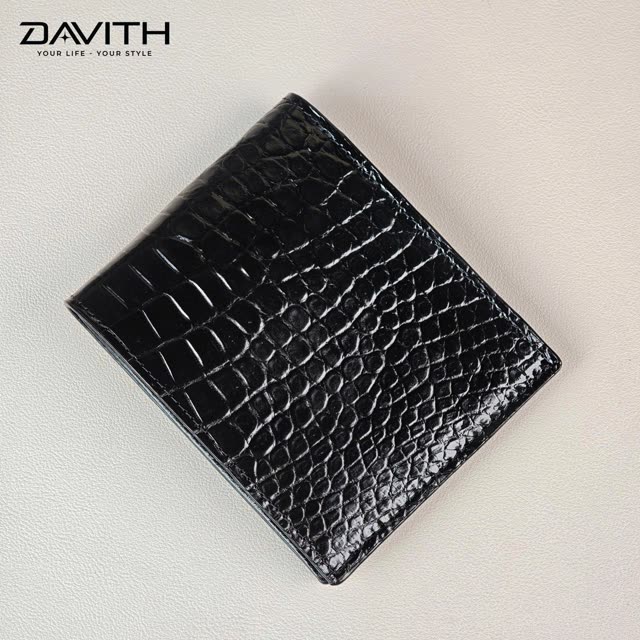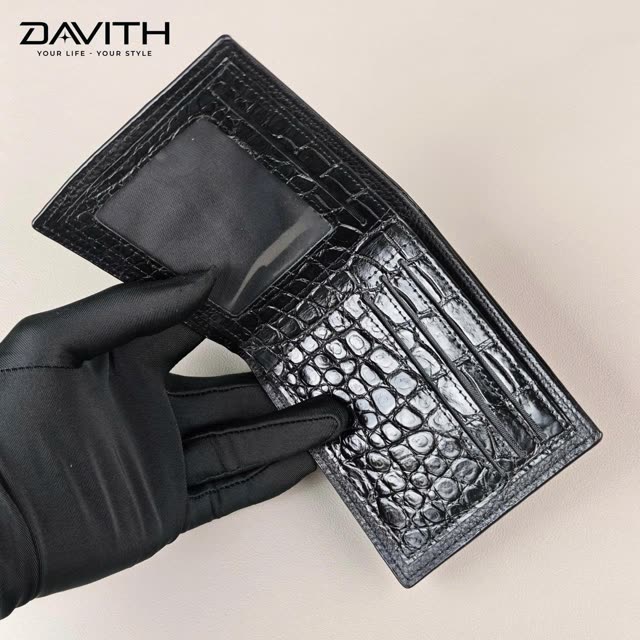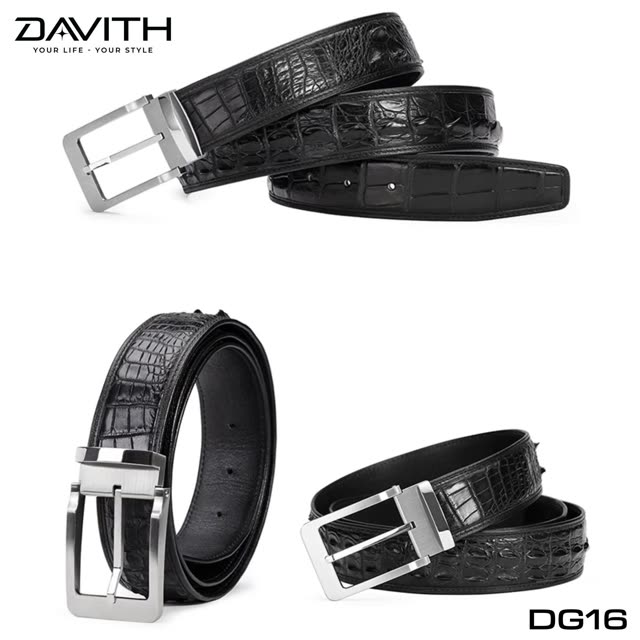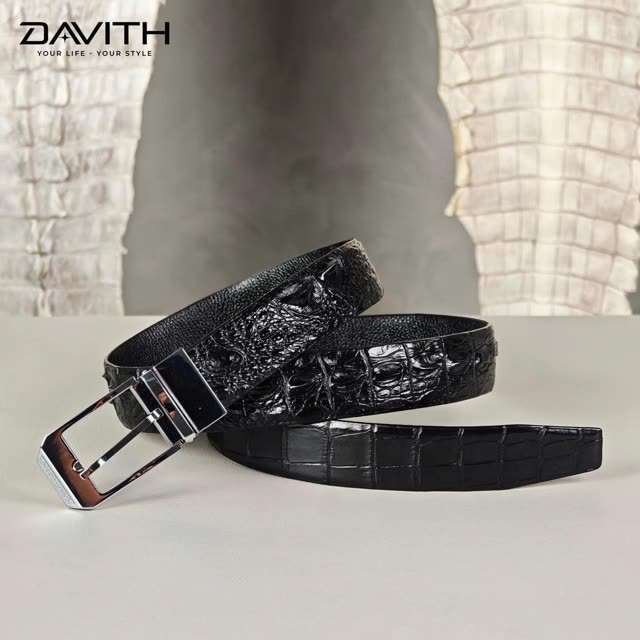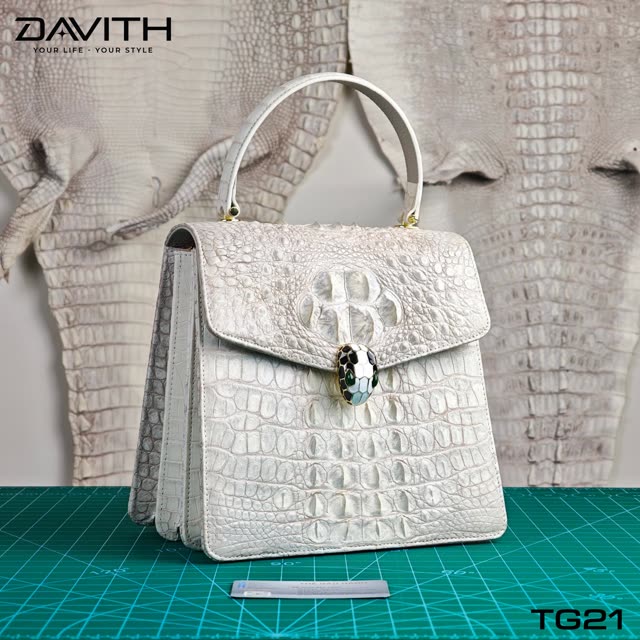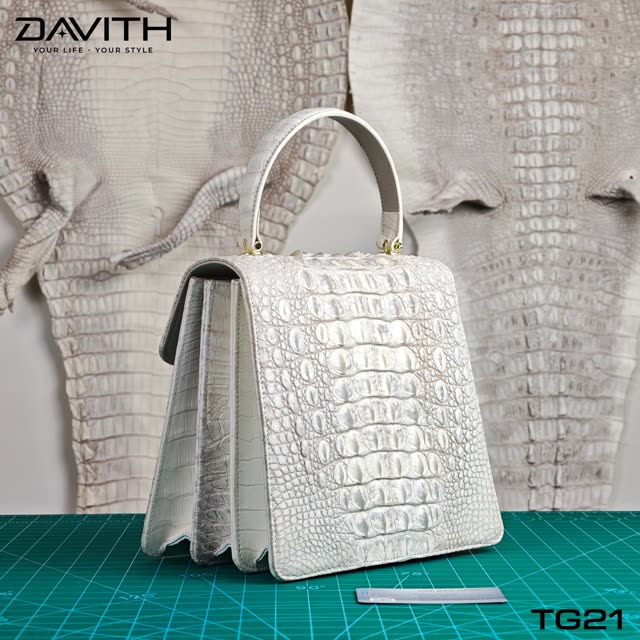
A lot of "crocodile" bags and belts sold online are cowhide or PU pressed with a crocodile-style pattern. Some listings even say genuine leather in the title while the material field says PU. Embossing is a legitimate technique, but it should be priced and described as what it is. Here are the seven checks our artisans use, with photos of real hides from our workshop in Ho Chi Minh City.
1. The scale pattern never repeats
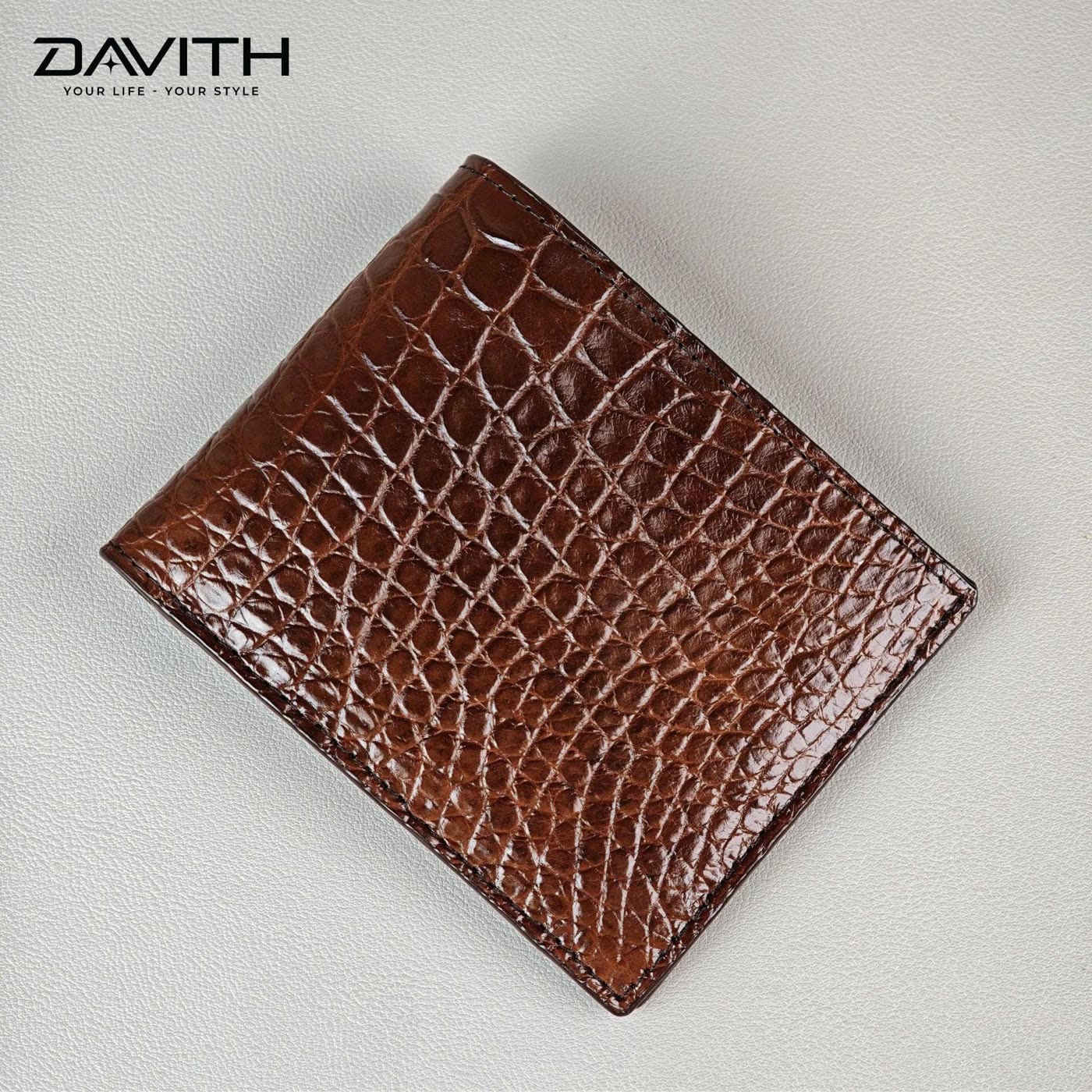
On a real belly cut, the scales are roughly rectangular, largest along the centre line and gradually smaller towards the flanks. Look along one row: neighbouring scales differ slightly in size, angle and spacing. Embossed leather is made with a metal plate or roller, so the same pattern comes back again and again. If you can find two identical patches on one bag, or the scales alternate in a perfectly regular large-small rhythm, it is very unlikely to be a real hide.
2. Look for the small "pore" on each scale
True crocodiles have a tiny dot near the edge of most belly scales. It is a sensory organ (called an integumentary sensory organ, or ISO), and it survives tanning as a small pit or dot. Alligators and caimans do not have these dots on their belly scales, which is one way experts tell the species apart. Embossing plates rarely reproduce them, and when they do, the dots sit in the same position on every scale. Use your phone torch at a low angle: the dots show up as tiny shadows.
3. Hornback ridges are hard and uneven
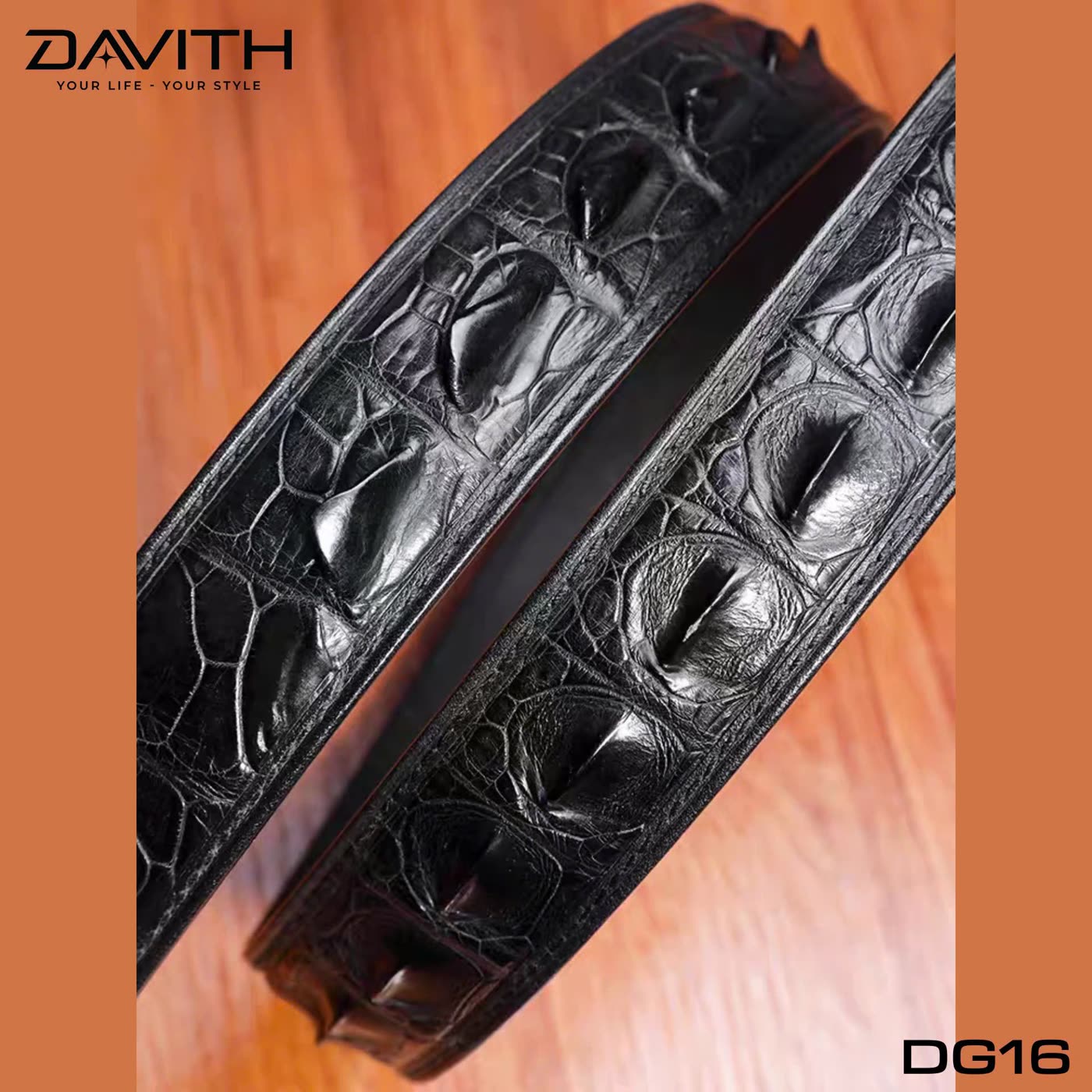
Hornback leather comes from the back of the animal, where bony plates sit under the skin. The ridges are firm when you press them, each one a slightly different height and shape, and they catch light in curved streaks. Embossed "hornback" is soft to the touch, the ridges are all the same height, and the surface reflects light evenly like plastic.
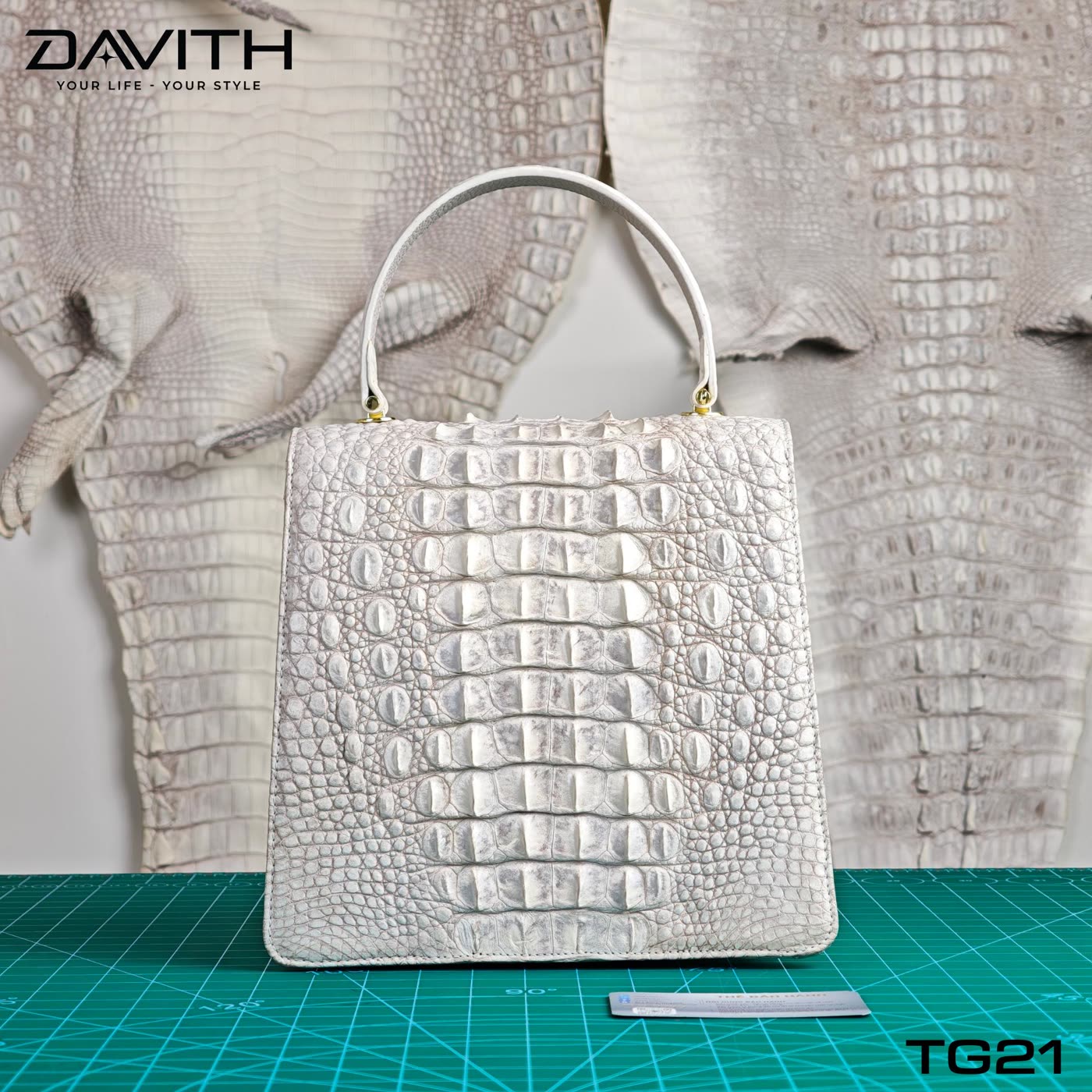
4. Check the edges and the back
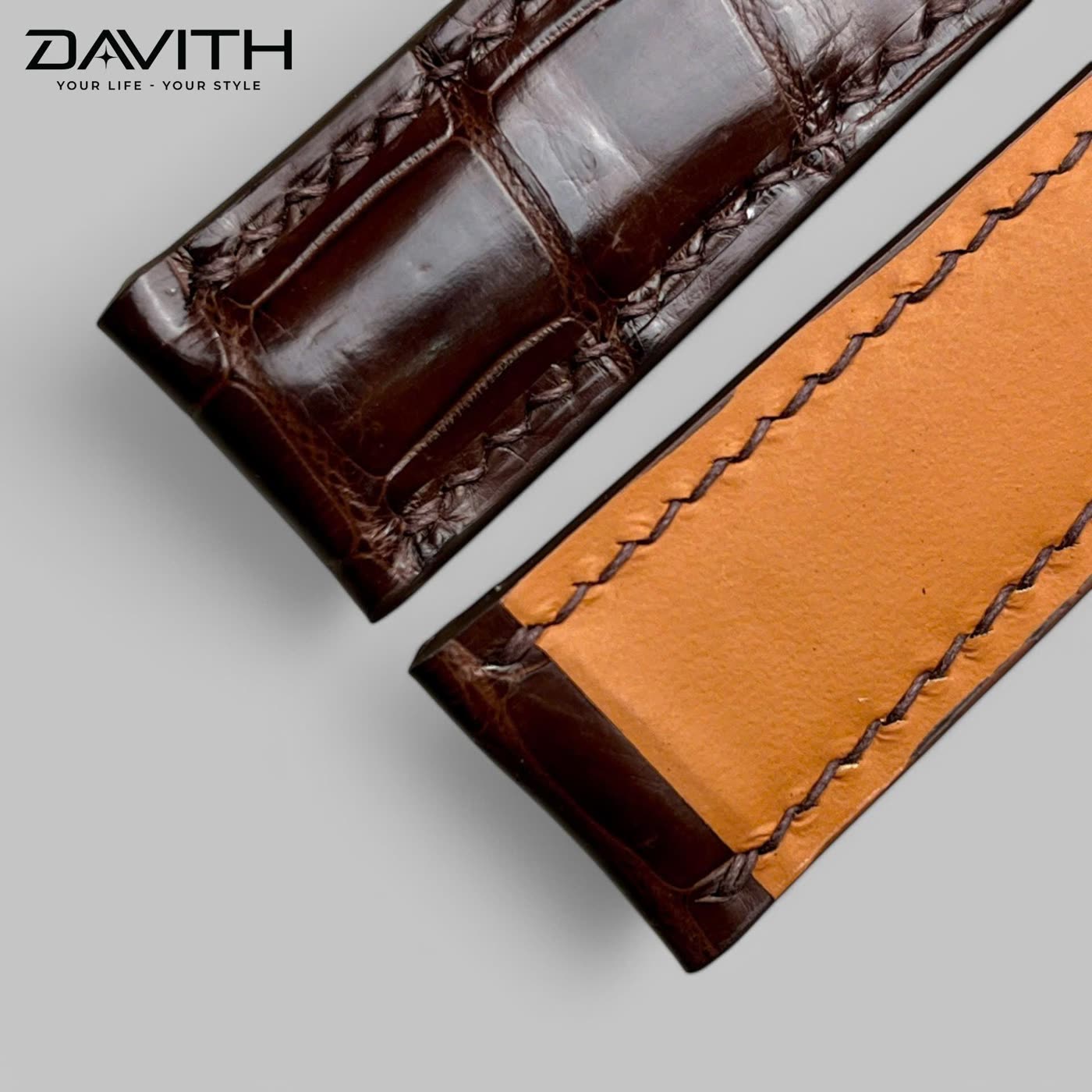
On a belt, strap or wallet, look at the cut edge. Real exotic leather is usually backed with a separate lining (on our pieces, cowhide) and the edge is painted and burnished. With embossed leather the "scales" and the back are often the same single layer, and the pattern stops abruptly at the edge. Also check where the pattern meets a seam: on real hide, the stitching has to work around scales of different sizes, so it never lines up neatly with the pattern.
5. Bend it gently
Fold a strap or a corner of a wallet slightly. Real crocodile leather flexes between the scales, along the natural grooves, and the scales themselves stay mostly flat. Embossed leather creases across the printed pattern, wherever it bends, and the "grooves" can stretch or flatten out.
6. Colour that varies, not a flat coat
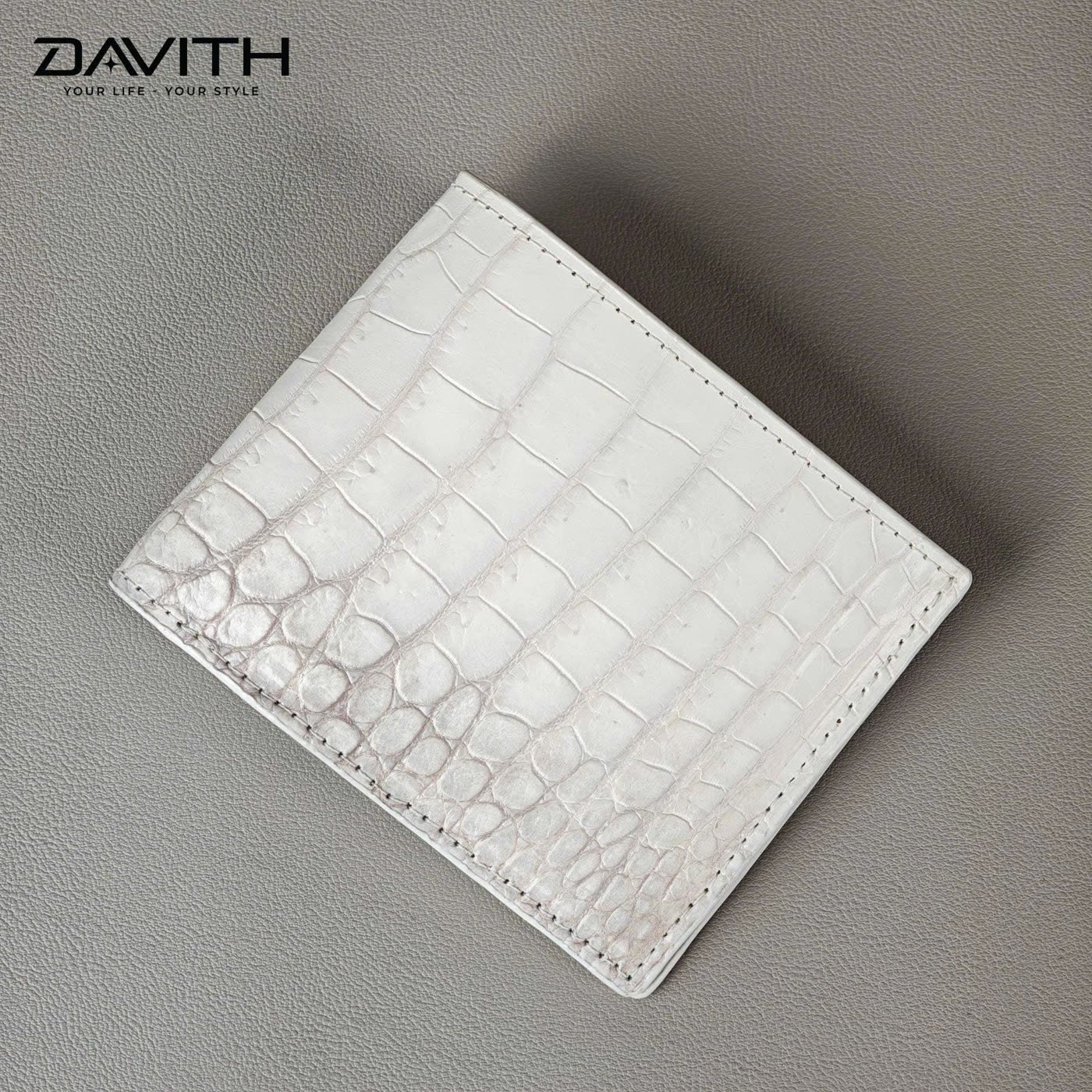
Hides take dye unevenly: the grooves between scales are usually darker than the scale tops, and the colour shifts slightly across the piece. This is especially visible on white and pale leathers. Professionally whitened crocodile keeps the natural shading of each part of the hide; a surface paint looks perfectly flat. Also note that "white crocodile" leather is almost always whitened in the tannery, not taken from a naturally white animal, and an honest seller will say so.
7. Price and paperwork
A whole crocodile hide is expensive and only part of it is usable for any one product, so very cheap "genuine crocodile" items deserve suspicion. Ask the seller three things: which part of the hide is used (belly, hornback or tail), whether the piece is cut from one continuous section or pieced together, and where the skins come from. Crocodilian leather is regulated internationally under CITES, so a serious maker should be able to explain their sourcing and the rules for shipping to your country.
Quick checklist
- Scales vary in size and never repeat in an identical block
- Small sensory dots on belly scales (true crocodile)
- Hornback ridges are hard, uneven and catch light in curves
- Separate lining and a painted, burnished edge
- Flexes along the grooves, not across the pattern
- Colour varies slightly from scale to scale
- The seller can tell you the hide section and sourcing
How DAVITH stands behind it
Every DAVITH piece is cut from whole-piece crocodile leather and made to order by our own artisans. If the leather of any piece we sell is ever proven not genuine, we refund one hundred times the purchase price. You can see the scale detail of each product in close-up photos on its page, and you are always welcome to ask us for more photos or a video of the hide before you order.