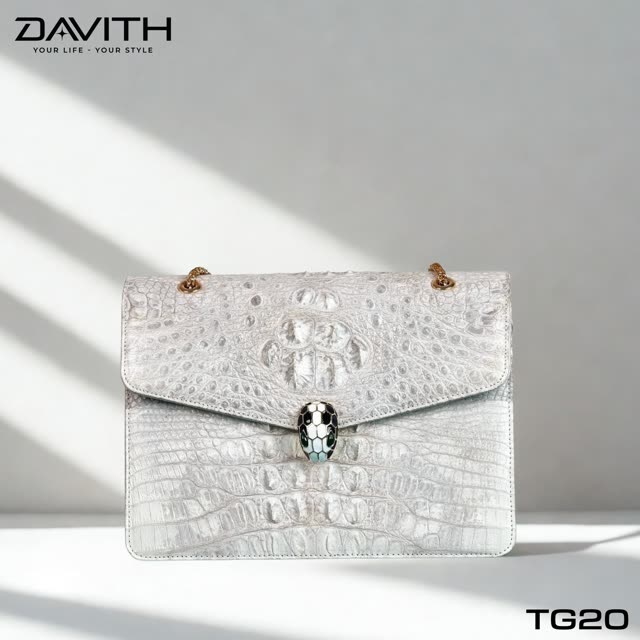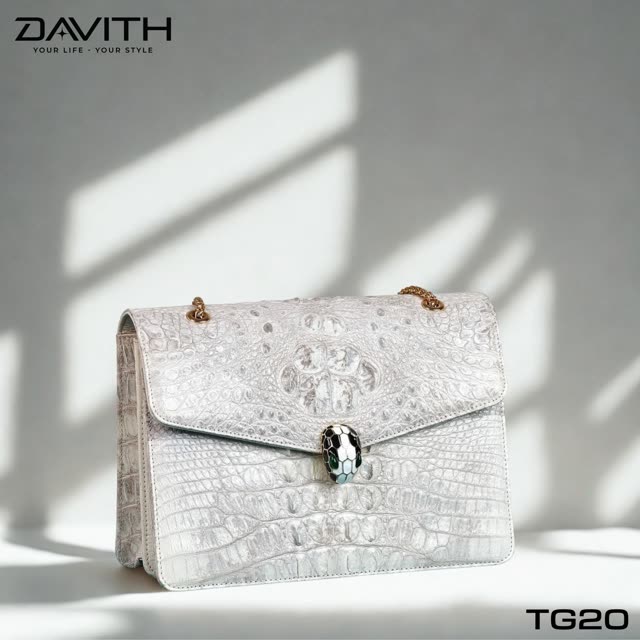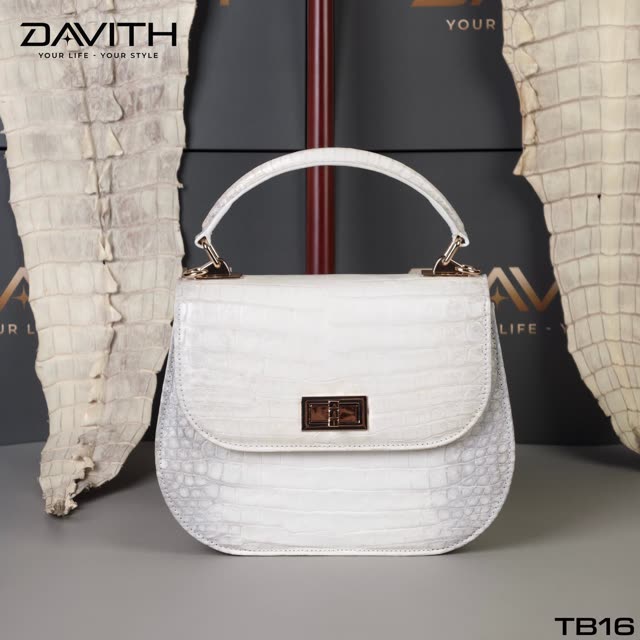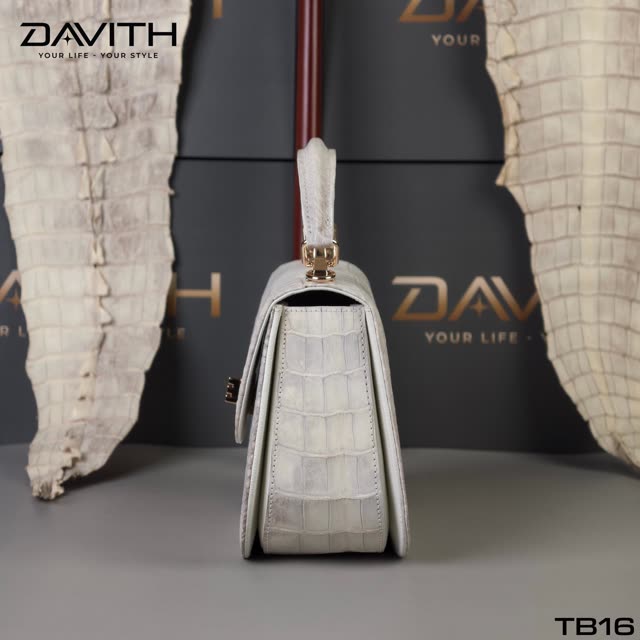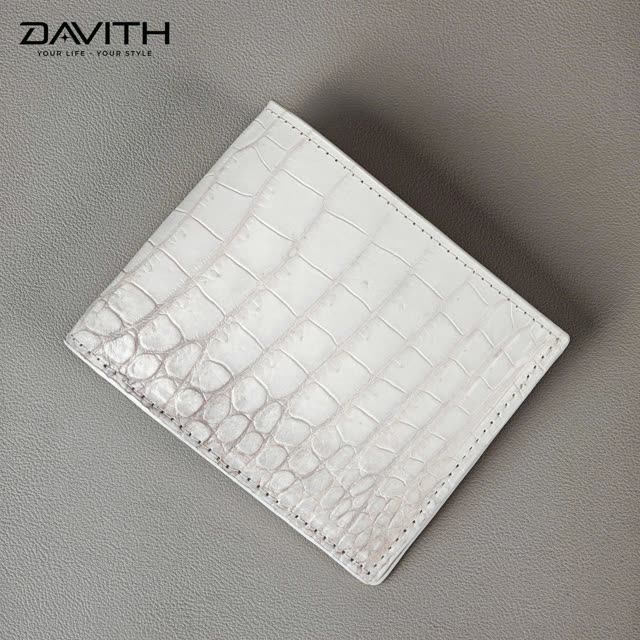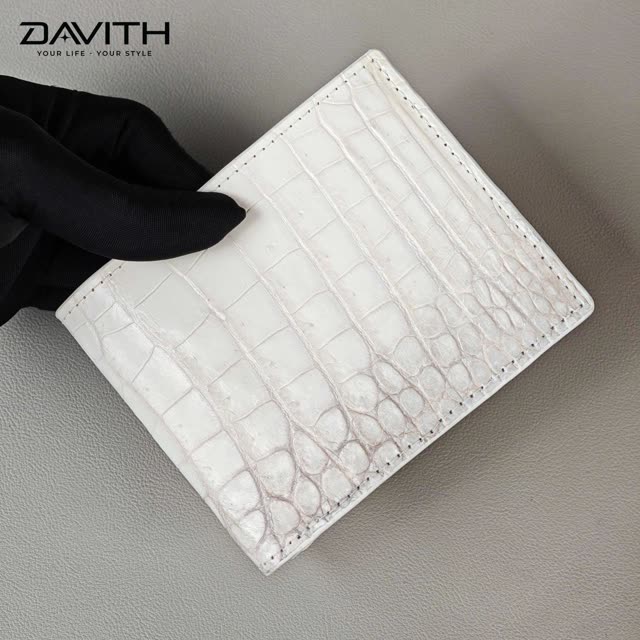
White crocodile bags are among the most striking pieces in leather goods, and among the most misunderstood. The white does not come from a white animal. It is created in the tannery, slowly and with a high failure rate, and that process is what gives a good white crocodile piece both its beauty and its price.
It is not "albino" crocodile
Naturally white crocodiles exist but are extremely rare, and they are not a source of leather. Virtually every white crocodile bag on the market, from the great leather houses to our own atelier, is made from a hide that has been professionally whitened: a naturally coloured skin that is stripped of its pigment and brought to a pale tone by hand. We say this plainly in every DAVITH listing, and you should expect any honest seller to do the same.
How whitening works
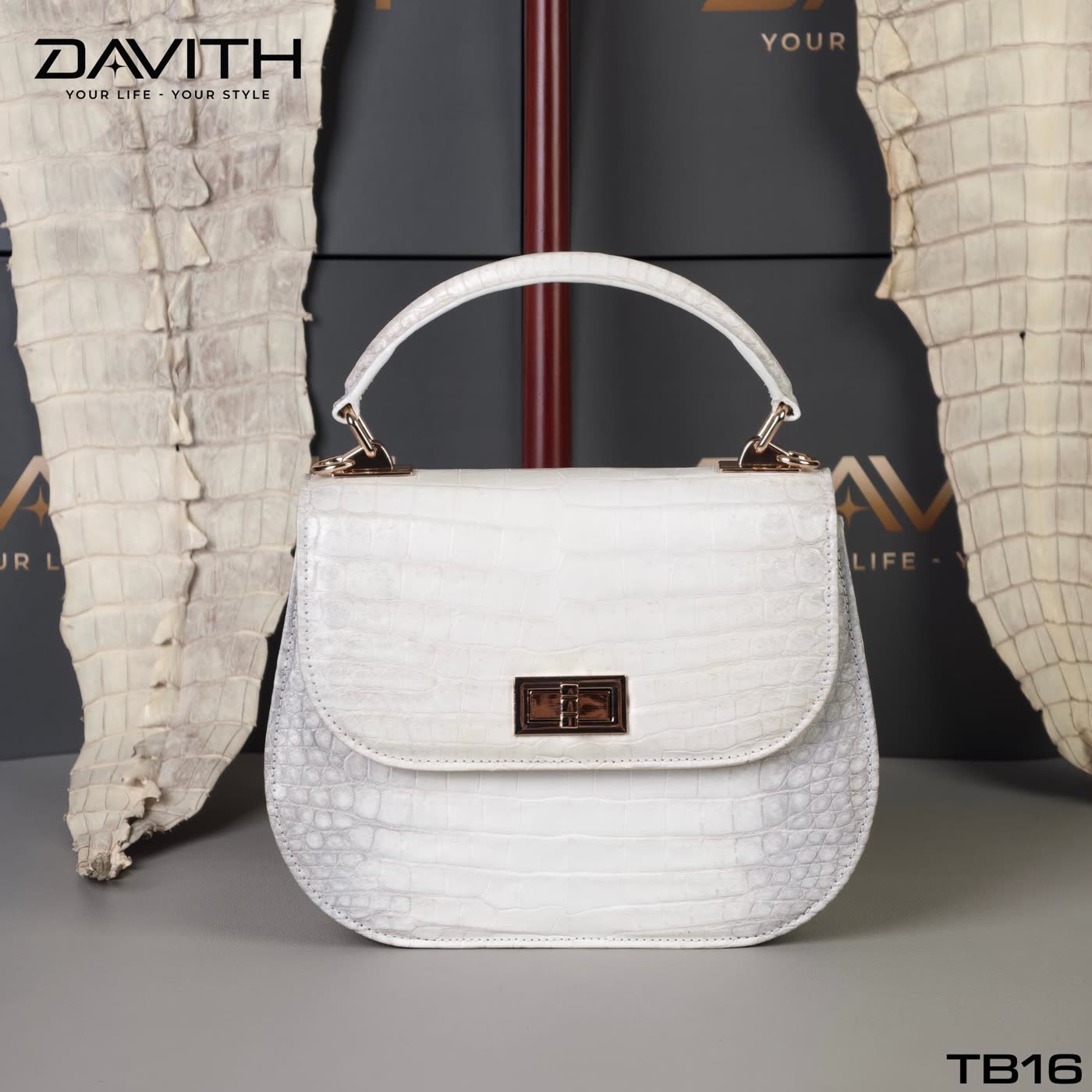
Whitening is done on the raw, untinted hide before any colour is added. Over many careful stages the natural pigment is removed and the leather is brought towards white, while the tanner tries to keep the fibres strong and the scales intact. Push too hard and the leather weakens or the surface is damaged; stop too early and the colour stays patchy. The hide is then finished and softened like any fine leather.
The result is never a uniform, paper-white sheet. The scale tops, the grooves and the different zones of the hide each keep a slightly different tone, from ivory to chalk-bright. That variation is the signature of real whitening.
Why only about one hide in ten makes it
In our experience only around 10 to 15 percent of hides that enter the whitening process come out with an even, beautiful white and sound leather. The rest show patches, uneven tone or weakened areas and cannot be used for a white piece. White also hides nothing: every scar or blemish that a dark dye would cover becomes visible, so only clean hides are worth whitening in the first place.
That low yield, plus the extra time and the need for flawless hides, is why a white crocodile piece costs more than the same design in brown or black.
Whitened or painted? How to tell
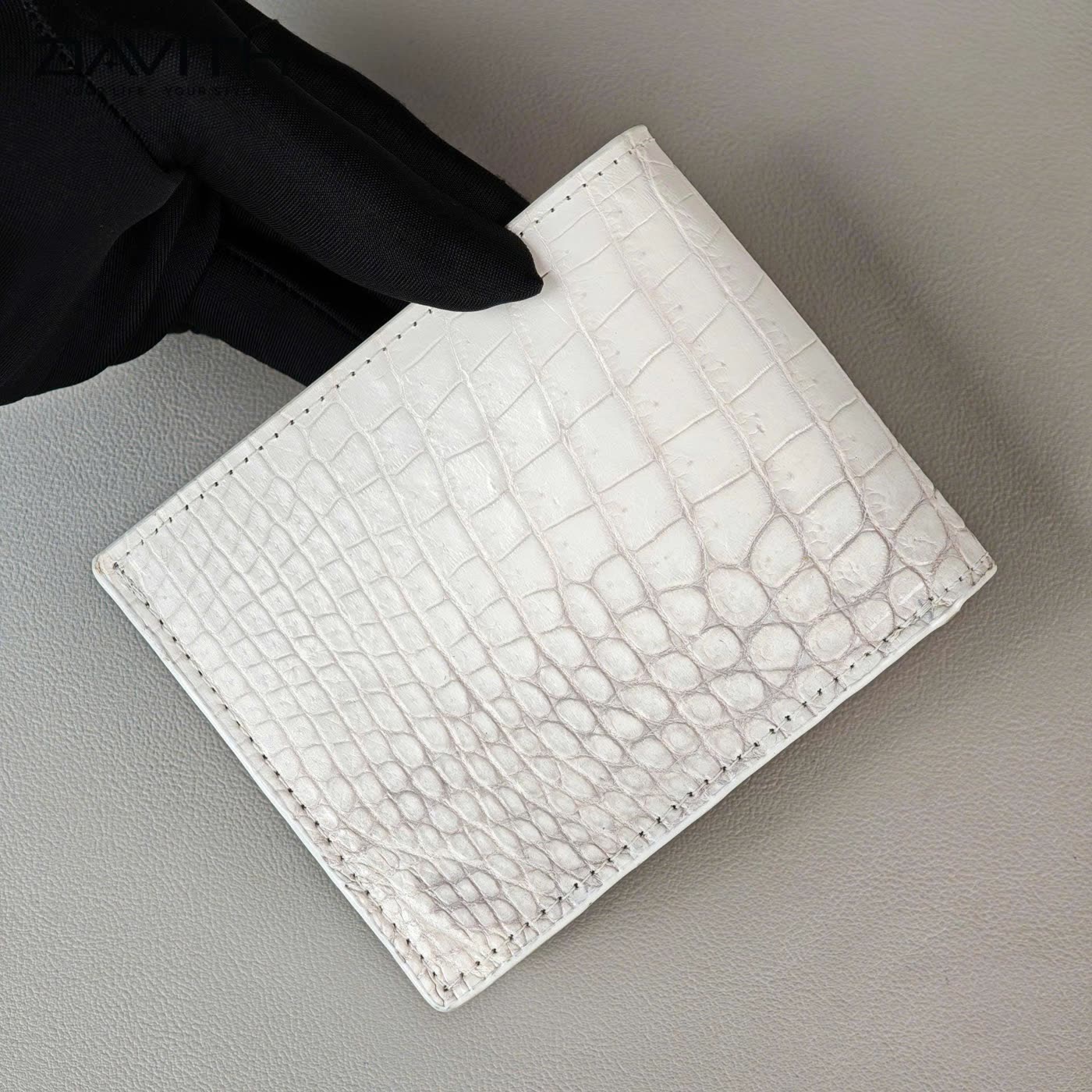
- Tone: whitened leather varies softly from scale to scale and is often slightly darker in the grooves. A painted or coated finish looks perfectly flat and identical everywhere.
- Surface: a thick coating can look plasticky and sit on top of the scales; whitened leather keeps the natural texture and sheen of the scales.
- Edges and flex points: with a surface coat, wear points can crack or show the darker leather underneath over time. Whitened leather is pale through its surface.
Belly or hornback in white?
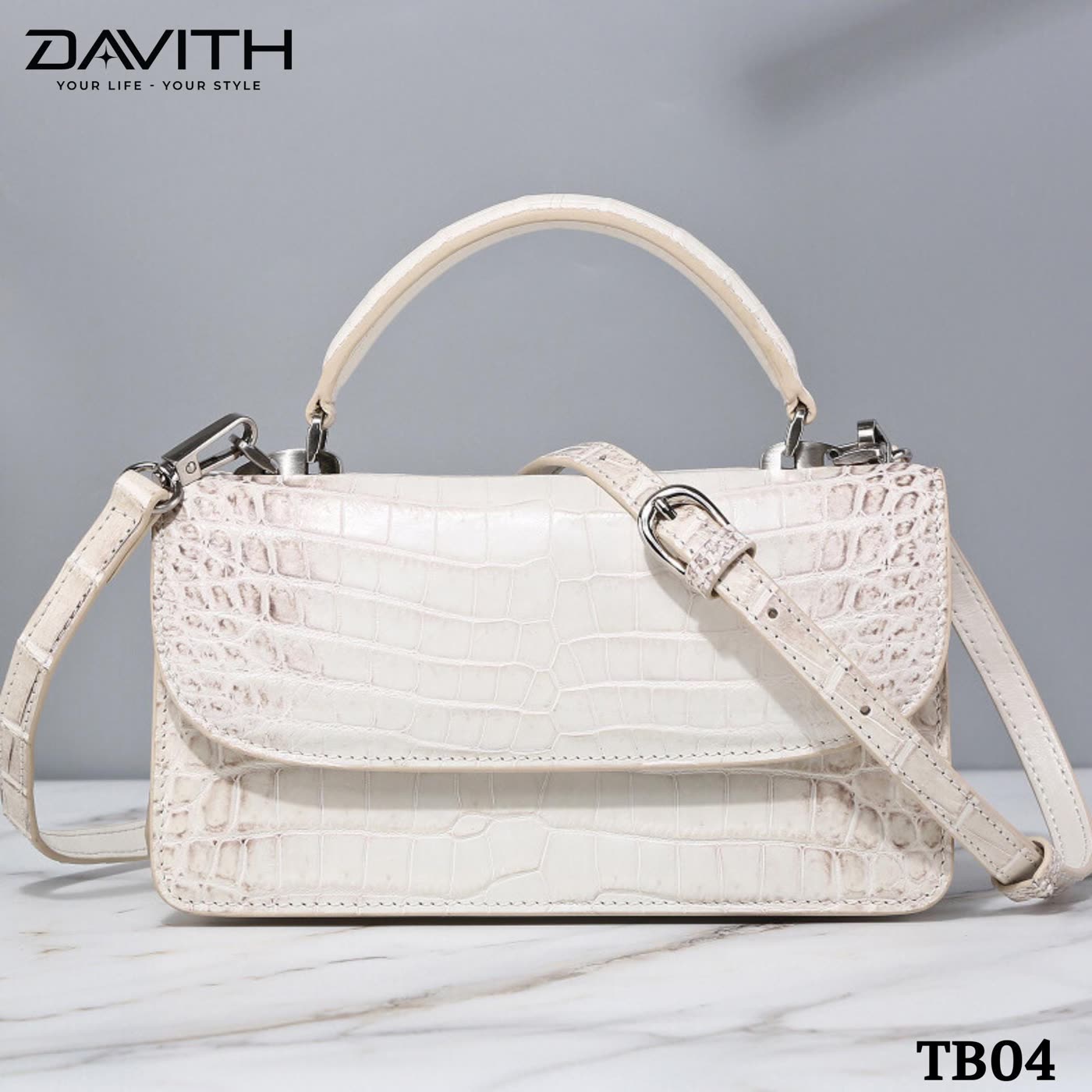
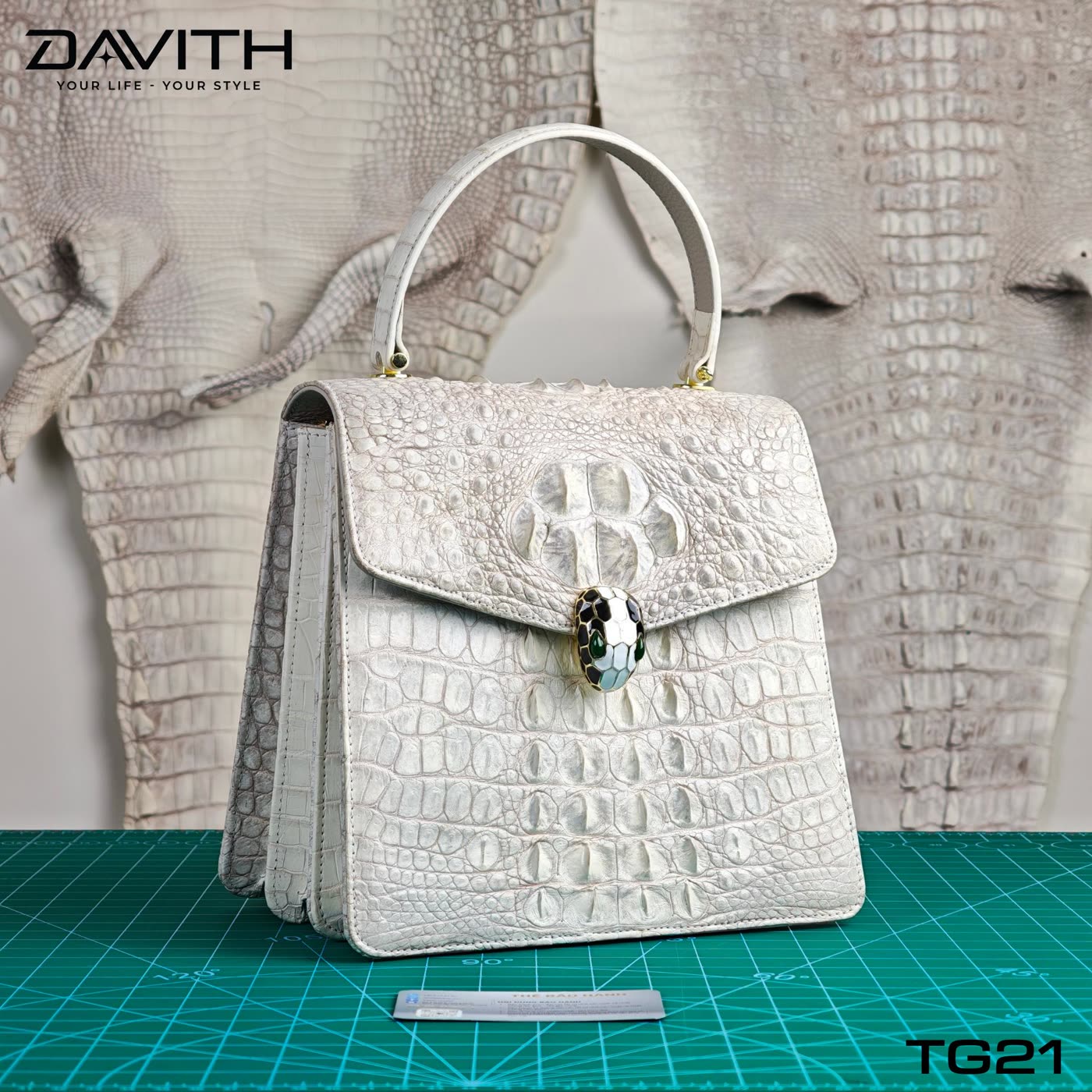
White is especially beautiful on hornback, because light and shadow play across the ridges and make the texture stand out. White belly leather looks softer and more classic. Our guide to belly, hornback and tail explains the difference in more detail.
Caring for white crocodile leather
- Watch out for dye transfer. Dark, raw denim and freshly dyed clothing can rub colour onto pale leather. Carry a white bag away from new jeans, especially when it is warm or humid.
- Keep it out of strong sunlight for long periods; store it in its dust bag, away from heat.
- Wipe, do not scrub. Use a soft, dry, clean white cloth. Avoid household cleaners, wipes and solvents.
- Condition with a colourless product made for exotic leather, a few times a year, and test it on a hidden area first.
- For stains, ask before you treat. Send us a photo; DAVITH pieces include free lifetime conditioning, and we can advise or take the piece back for professional care.
White pieces in our collection
Our whitened collection includes top-handle and shoulder bags in hornback and belly, a round mini bag in both cuts, a clutch wallet and a bifold wallet. Every piece is made to order from a hide selected for its colour, so the one you receive will be unique. Browse the white crocodile handbags or the wallets.