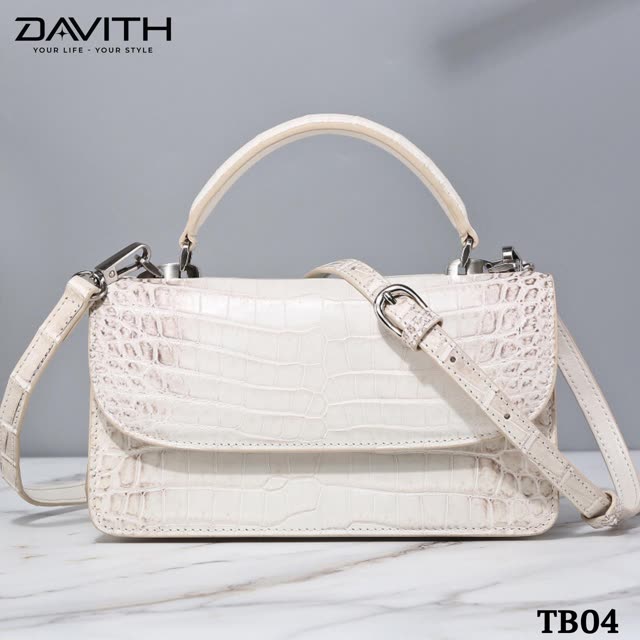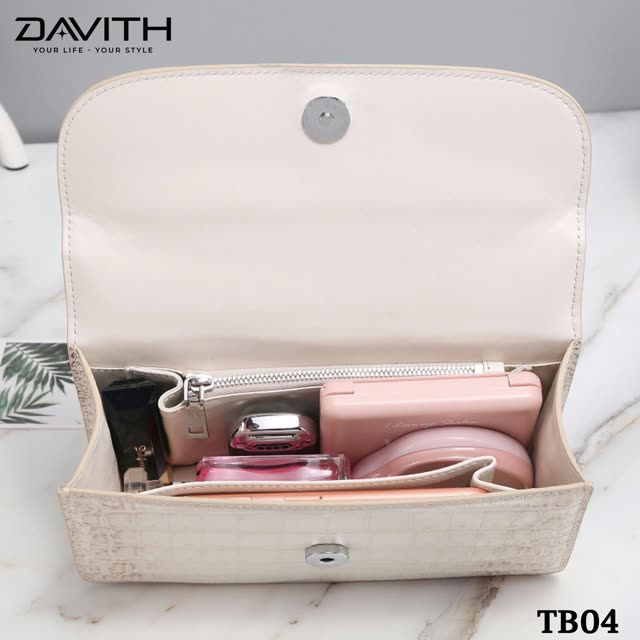
Shops often use "crocodile", "alligator" and even "croc" as if they were the same thing. They are not. Crocodiles and alligators belong to different families of reptiles, and a third relative, the caiman, gives a cheaper and stiffer leather that is sometimes sold under the crocodile name. The good news: with a little practice you can tell them apart by looking at the belly scales.
Three animals, three leathers
| Crocodile | Alligator | Caiman | |
|---|---|---|---|
| Family | Crocodylidae (true crocodiles) | Alligatoridae | Alligatoridae |
| Where farmed | Southeast Asia, Australia, Africa | Mainly the south-eastern United States | Central and South America |
| Dot on each belly scale | Yes | No | No |
| Umbilical scar on belly | No | Yes | No |
| Feel | Supple belly, even tiles | Supple belly, larger and more varied tiles | Stiffer; bony plates inside the belly scales |
| Price level | High | High | Lower |
Sign 1: the dot on each scale
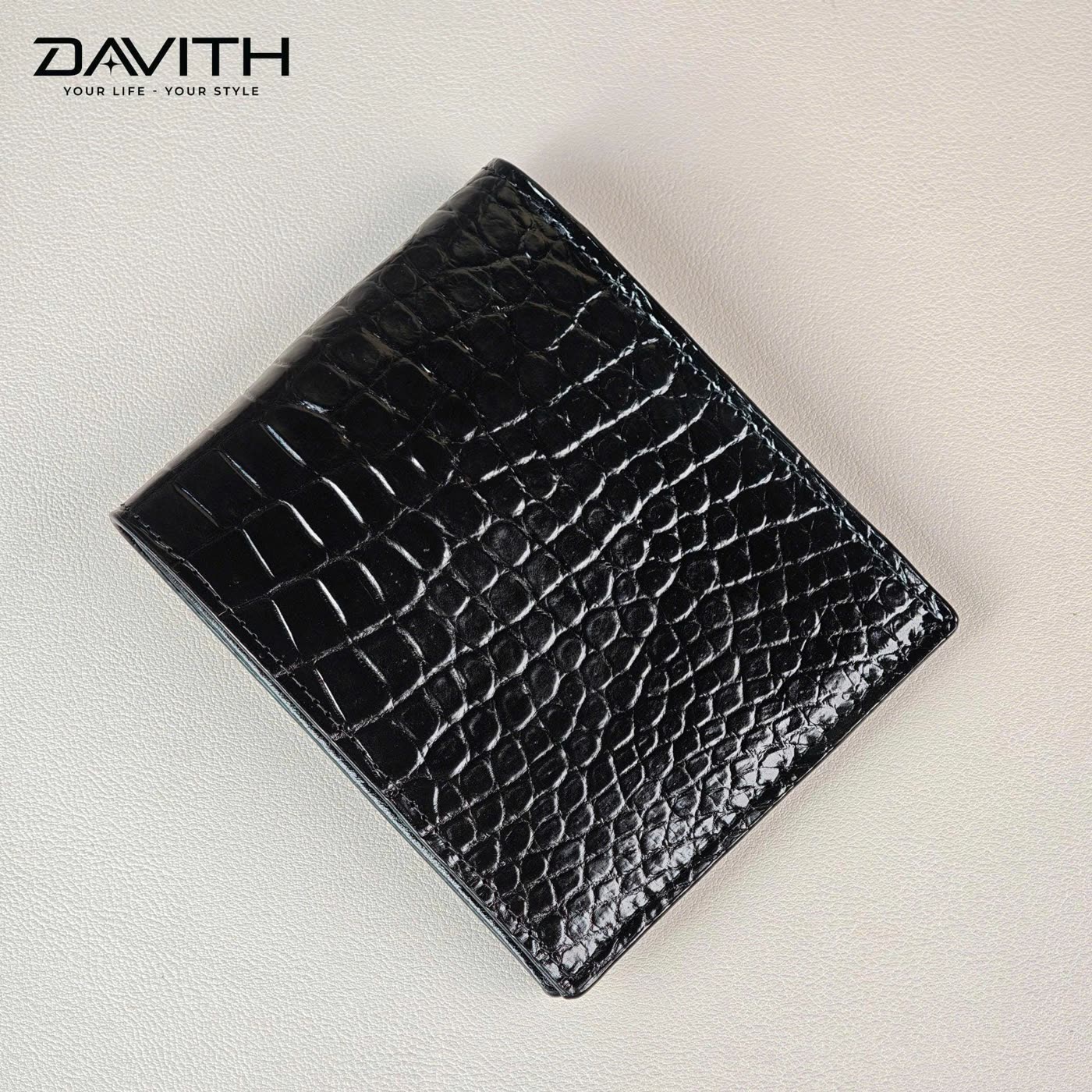
True crocodiles have a tiny sensory organ near the edge of most belly scales, called an integumentary sensory organ (ISO). After tanning it shows as a small dot or pit. Alligators and caimans only have these organs around the jaws, so their belly scales are clean. It is the most reliable single check, and the one specialists rely on. A phone torch held at a low angle makes the dots easy to spot.
Sign 2: the umbilical scar
Alligators carry a distinctive mark in the middle of the belly: the umbilical scar, a patch where the regular tiles break into a web of small irregular scales. On a whole alligator belly it is unmistakable, and some makers place it deliberately on the front of a bag as proof of species. Crocodile bellies do not have this mark. If a piece is cut from a small area, the scar may simply not be in it, so use it as a confirmation rather than the only test.
Sign 3: hard, bony scales (caiman)
Caiman scales contain small bony plates, even on the belly. The leather is stiffer, the scales can look slightly cracked or lined across the middle, and it does not drape like crocodile or alligator. Caiman is a perfectly real exotic leather and much cheaper, which is exactly why it is worth knowing: a "crocodile" bag at a surprisingly low price is often caiman.
Scale size and pattern
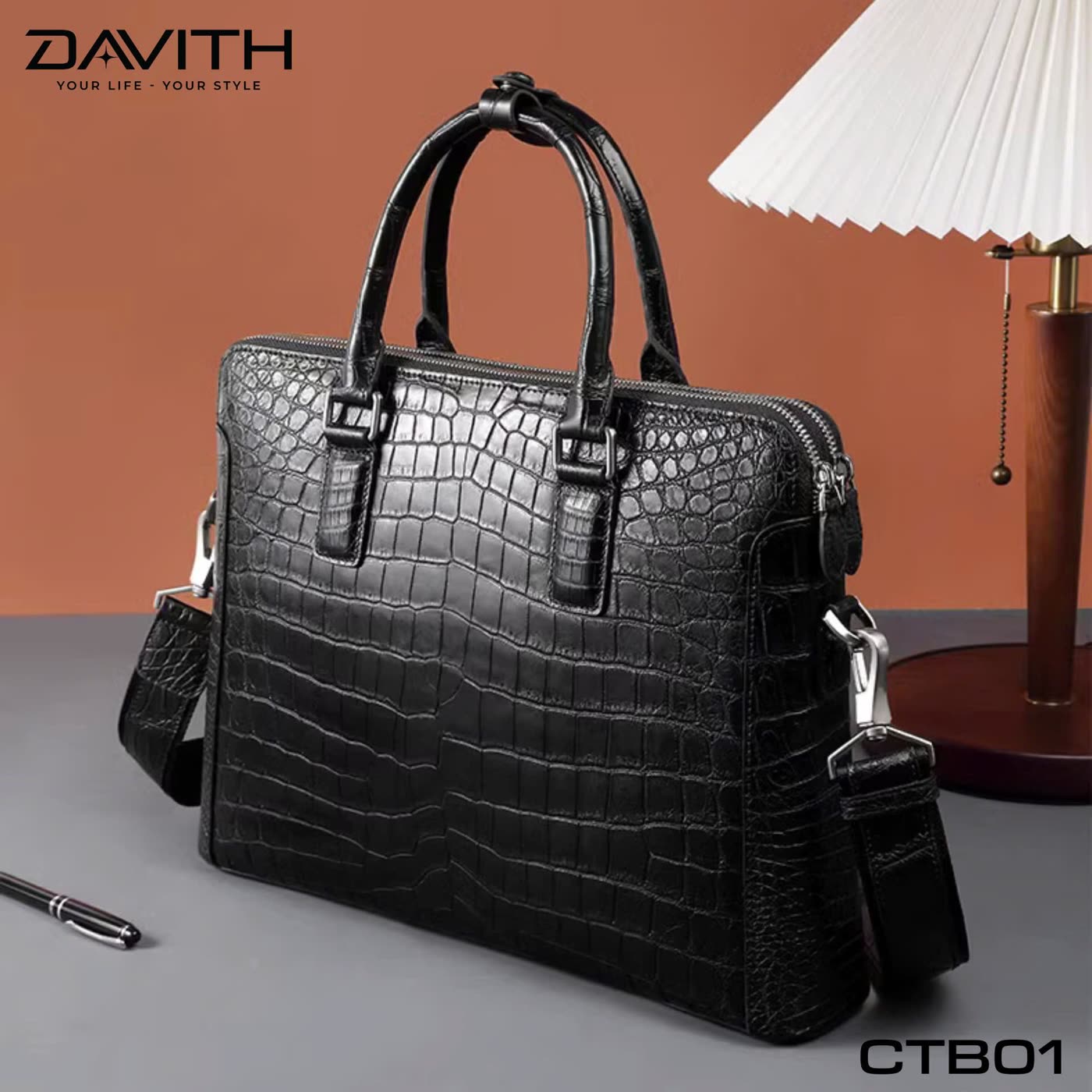
As a general rule, crocodile belly tiles are a little smaller and more regular, while alligator tiles are larger and change size more noticeably from the centre to the sides. Size alone is not reliable, though, because it depends on the age of the animal and which part of the belly was used. Combine it with the dot test.
Is one better than the other?
Not in quality. Crocodile and alligator are both premium leathers, and the finest examples of each are used by the great leather houses. The choice is about look: crocodile tends to give a tighter, more uniform grid, alligator a bolder, more varied one with the option of showing the umbilical scar. What matters most is honesty: the seller should tell you which species you are buying, and the price should match it.
A note on regulations
All crocodilians, including alligators and caimans, are listed under CITES, the international convention that regulates trade in wildlife. Farmed crocodile and alligator leather is traded legally, but crossing borders can require permits depending on the species and the countries involved. A serious seller will explain where the skins come from.
What we use
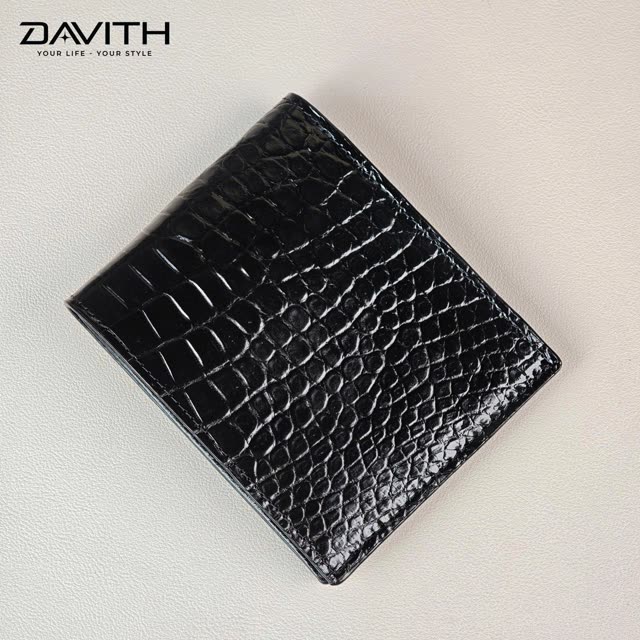
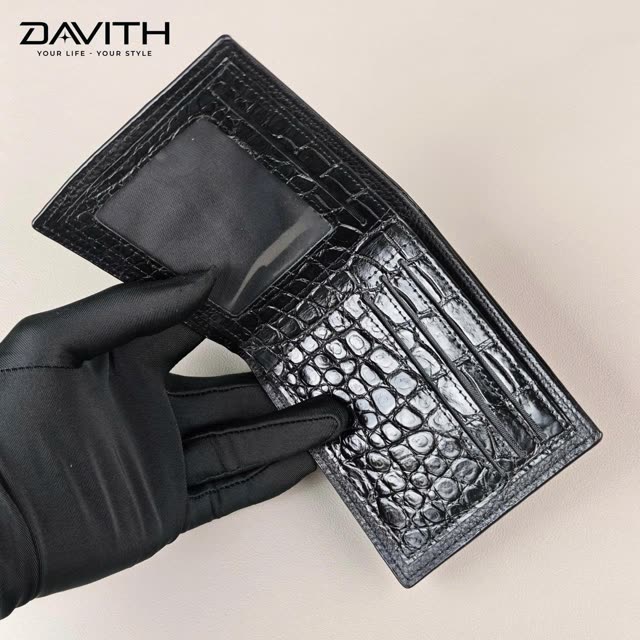
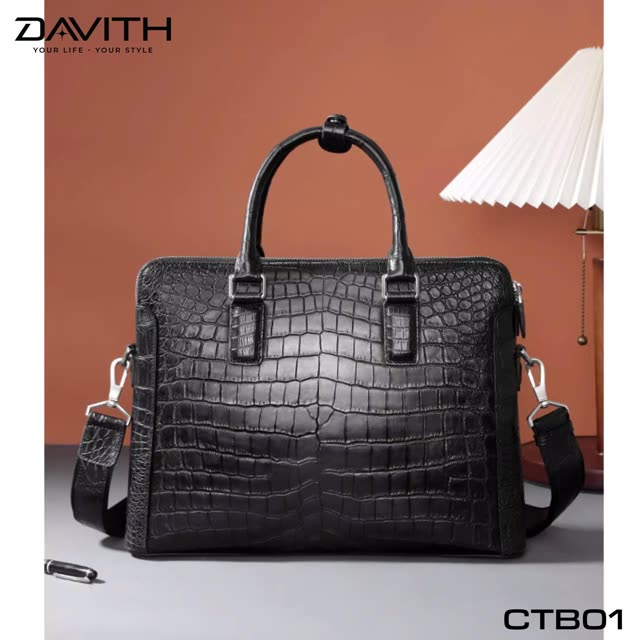
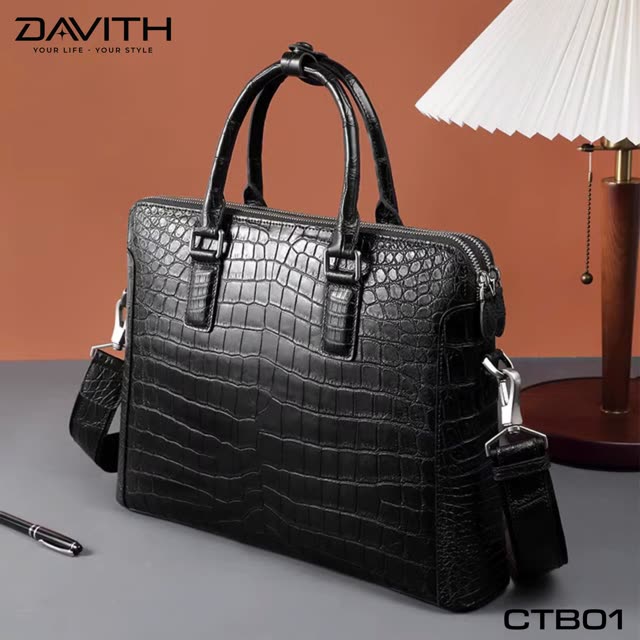
DAVITH works with crocodile leather, cut and finished in our workshop in Vietnam. We do not use alligator or caiman, and we never sell embossed leather as crocodile. If the leather of any piece we sell is ever proven not genuine, we refund one hundred times the price. For more checks, read how to tell real crocodile leather from embossed, and for the different cuts, belly vs hornback vs tail.